viernes, 6 de febrero de 2015

Laws of Football - Summary of the Basic Rules

Laws of Football - Summary of the Basic Rules

The following is a very simple summary of the key laws of the game of football, hopefully written in an easy-to-understand way.

The Pitch

The playing area ('pitch') must be rectangular and be between 90m (100yds) and 120m (130yds) long and between 45m (50yds) and 90m (100yds) wide. The end lines are called goal lines and the side lines are called touch lines.

The Ball

The ball must be spherical with a circumference of between 68cm (27in) and 70cm (28in) and a weight between 410gm (14oz) and 450gm (16oz).

Teams / Players

A match ('game') consists of 2 teams, each with no more than 11 players - including a goalkeeper ('goalie') - and no less than 7 players.

Player's Kit

Basic kit consists of a shirt, shorts, socks, shinguards and boots/shoes. Goalkeepers must wear colours different from other players - including their own side - and match officials.

Match Officials

Each match is controlled by a referee supported by 2 assistant referees. He stops the game by means of a whistle for any infringement. He also acts as timekeeper. The assistant referees indicate by flag when the ball is out of play. They also flag when they see infringements that the referee may not have seen.

Game Duration

A game consists of 2 halves of 45 minutes each, with an interval (half-time) of a maximum of 15 minutes. The referee may add on additional time at the end of each half to compensate for time lost through injuries, substitutions and players' deliberate 'time-wasting.'

Starting the Game

A coin is tossed to decide which team gets to choose which goal to attack. The losing team gets to take the kick-off to start the game. The teams change ends for the second half. A kick-off is also used after a goal is scored.

Ball Out of Play

A ball is out of play ('out') when the whole ball has crossed the goal line or touch line.

Goals

A goal has been scored when the whole ball has crossed the goal-line between the goal-posts. The team scoring the most goals wins. If both teams score the same number of goals - or neither team scores - the game is drawn.

Offside Rule

A player is penalized for offside if at the instant the ball was played by a team mate, the player was actively involved in the play and did not have 2 opposing players between him/her and the opposition's goal line. The player is not in an offside position if he/she is in his/her own half, or, is level with the second last opponent, or, receives the ball from a goal kick, corner kick or throw-in. An indirect free kick is awarded for offside.

Free Kicks and Penalty Kicks

There are 'direct' and 'indirect' free kicks. These are just some of the offences for which a direct free kick is awarded:- hitting, kicking; tripping; pushing; deliberate hand ball; etc. Similarly for an indirect free kick we have:- dangerous play; impeding an opponent ('obstruction'); a goalie holding the ball for more than 6 seconds; a goalie handling the ball after it has been passed to him by a team mate, etc.

At the subsequent free kick, all opposition players must be a minimum of 9.15m (10yds) from where the ball is placed. A penalty kick is awarded for any infringement which takes place inside the penalty area for which a direct free kick would normally have been awarded if it had occurred outside the area.

Goal Kicks

Awarded to the defending team when the whole of the ball crosses the defending team's goal line - not between the goal posts because that is a goal - after having been last touched by an attacking player.

Corner Kicks

Awarded to the attacking team when the whole of the ball crosses the defending team's goal line - not between the goal posts because that is a goal - after having been last touched by a defending player.

Throw-Ins

Awarded to a team when the whole ball crosses a touch line after having been touched by a member of the opposing team.

The above should be sufficient for folks, new to football / soccer, to be able to follow and enjoy this fabulous game. Good spectating!

John Salter is the Editor of ClanFootball.com. For free soccer news, scores, league tables, soccer video skills, articles and free online games, please go to http://www.clanfootball.com now.

A Look at Ronaldinho

A Look at Ronaldinho

For any soccer fan who loves a champion, Ronaldinho is their Brazilian God. He not only has become one of the best soccer players in the world, but he has proven to have enough talent to last a lifetime. This winner stunned critics, as he recently won the FIFA World Player of the Year award in 2004. Although he had a tough time growing up, the soccer player has pushed all boundaries and has finally been able to live his dream.

Born and raised in Brazil, Ronaldinho grew up in a poor community. Although this was a struggle, his family stayed strong and began playing soccer as a pastime. Surprisingly, Ronaldinho's father and brother began playing on an amateur team, which may have driven his son to pursue the sport further. Even though his other siblings were amazing players, Ronaldinho had the same undying passion. Luckily, his father was able to see a potential that no one else took notice of. Ronaldinho not only had the talent, but he had the motivation to go the extra mile. As a result, Ronaldinho was on the path to fame and glory.

Unfortunately, the path to fame and glory began short. Ronaldinho's father drowned in a swimming accident when Ronaldinho was just beginning his ambition. However, his memory would continue to live on, and push the future soccer player to achieve his accomplishments.

The first big accomplishment for Ronaldinho was in 1997, when he scored over 15 goals for Brazil's Under 17 Championship. From then on, dozens of prominent teams were dying to sign him. Although hundreds of generous offers were given to Ronaldinho, he did not feel like it was his time to move on. Finally, in 20001, he signed with PSG.

During this time, he moved to PSG's location to begin playing European football. However, his new chapter was only causing negative tidal waves. PSG's manager, Luis Fernandez, claimed that Ronaldinho was too wrapped up in the club life. With drinking and other interruptions, PSG felt that he was not focusing on what was supposed to be important to him. Fortunately, in 2002, he was able to show them that he was far from oblivious. Ronaldinho impressed thousands as he did very well in the 2002 World Cup. Unfortunately, Ronaldinho wanted to move on, and start another chapter in his life.

After being offered 31 million dollars, Ronaldinho began playing with Barcelona. The champion impressed sports fans immediately, after he took Barcelona to the #2 spot in the Spanish league. Since then, Ronaldinho has been awarded the 2004 FIFA World Player of the Year award. Through dedication and hard work, Ronaldinho was able to break all barriers. With his father's memory and words of wisdom in hand, the infamous soccer player was talented enough to become one of the greatest players in history. Although he is now a millionaire, Ronaldinho still doesn't feel like he is the best player out there. He is simply the same boy he always was - ready to work hard and play even harder.

Visit www.ronaldinho.cc for more on Ronaldinho

jueves, 5 de febrero de 2015

Simple Theory for Soccer Betting

Simple Theory for Soccer Betting

Why is soccer betting popular?

If we were to compare other sports with soccer, soccer has the highest occurrences for weak team to beat a strong team down especially in English Premier League. Let's turn back the clock; can any of you recall the UEFA Championship final?? Clashed between Man.Utd and Bayern Munich in 1999 where Man.Utd successfully won Bayern Munich by 2 goals during 2 minutes injury time. For those who bet on Bayern Munich, how hard for punters to accept this, unfortunately this is the FACT. Well, as you can see, this is the most interesting part in soccer betting. There is a saying, "a football is round, therefore it might have unpredictable ending".

What is the simple theory in betting world?

Everything in the world is sharing the same natural concept and also follows the same trend. There is no exception for soccer betting. The theory is simple. When a graph makes an incline, of course the line will keep climbing and stop at a stage. No matter how high it reaches or how low it drops, there is always a stop to it. I would confidently say that only in minor cases, the graph will move up and down continuously within a short period of time. As example, you could notice that most market share will always have gradual incline and then follow by long dropping line repeatedly. You could also notice that the rich gets richer and poor gets poorer. In sports betting, I believe some of you did experience before winning streaks which you kept winning non-stop even though you simply put your bet. In contrast when encounter down period, even if you work hard to make analysis or follow the bet of your lucky friends but finally lose too. Why? The only answer is natural concept and trend. We must agree and follow the trend.

How betting trend works in soccer betting?

The rule of thumb is do not be stubborn to confidently place bets on teams that continuously lost and have the thinking that they would make a come back. This is totally wrong. Maybe you will win at the end by follow this type of betting strategy but how much capital you need to have and how much you need to lose before you can win the bet. Based on the trend concept, if a team is keep losing, the graph for them is dropping, we should bet against them until the graph reach a pit stop. In contrast, if a team turnover from lose to win, we should start chase the team to win until stop stage. How simple is it? Win keeps winning and lose keeps losing.

Which team to bet from among of uncountable matches?

When using the trend concept in soccer betting, it is safer if we use it to bet on strong team and only focus on climbing graph. Meanwhile, we put our bet only on strong team when they are in win stage. The reason to choose strong team is they need points to secure their position at the top of the league table. In addition, strong team with higher strength could easily win if victory is a must.

The last but not the least, I am sure you will have doubts on my simple theory - trend. I could tell you that my theory has been proven. I have been using the betting strategy for 2 consecutive years and it really works for me. From my bet statistics, it hits more than 75% accuracy.

Best regards,

Joseph Linhard
(Soccer Statistics Net)

http://www.soccerstat.net - provide soccer statistics based on Asian Handicaps and Fixed Odds for European major leagues, cups and World Cup, with tips and soccer team statistics.

http://www.soccerstat.net/summary.jsp - Your first place to start before you place your bet.

email: soccerstat@soccerstat.net

Famous Soccer Players and Their Nicknames!

Famous Soccer Players and Their Nicknames!

Perhaps the most popular of all football monikers is Pele or the Black Pearl, as the greatest footballer of all times, Edson Arantes do Nascimento, is known. Winner of three FIFA World Cups, he was latter dubbed O Rei (The King) for this outstanding achievements. Pele was a name the legend picked up in school, though even he wasn't too clear as to how he got the name! Whatever you call him, he will always be remembered as the ultimate when it comes to football.

If Pele was The King, Germany's Franz Beckenbauer was The Emperor (Der Kaiser). He dominated world football wearing the number 5 soccer shirt in 1974 and later went on to become the national team's coach. His teammate was another legend, Gerd Muller, who gained a formidable reputation as The Bomber for his goal scoring capacity - 365 in 427 Bundesliga matches and 68 in 62 international matches!

Carrying on with titles both royal and military, Hungarian Ferenc Puskas, was referred to as The Galloping Major! It was the player's actual rank as well as his nickname in the Hungarian army team. This three time UEFA Cup winner with Real Madrid was also dubbed the Cañoncito (Little Cannon) by adoring fans. And then, of course, there was Eric 'The King' Cantona and 'Guv'nor' Paul Ince, who became the first black player to captain England's national team. Brazilian Adriano Leite Ribeiro, was fondly called L'Imperatore (The Emperor) and even 'The Bulldozer' at different points of his prolific career!

Moving on to names more 'beastly', who can forget Brazil's Edmundo, who came to be known as 'O Animal' after his exploits on the pitch! Years before him, the dazzling dribbler Garrincha was dubbed Little Bird, and ended his career as The Joy of the People or Alegria do Povo.

Argentinean legend, Maradona, who made the number 10 soccer shirt a much sought after inheritance, began with the nickname Fluffy due to his untidy mop! Thankfully, he didn't get stuck with the sobriquet, and moved on to an extremely flattering one - The Golden Child or El Pibe de Oro. But when it comes to Diego Maradona can that be enough! He became the only player in the world whose body part has been given a nickname - The Hand of God - after his infamous goal during the 1986 FIFA World Cup!

One of the most interesting pet names by far has to be The Baby Faced Assassin! Norwegian footballer Ole Gunnar Solskjaer, spent his best years at Manchester United, where he scored 126 goals, earning him a reputation as The Baby Faced Assassin for his lethal goal scoring skills, matched with his misleading 'babe in the woods' look!

These diminutives have become so popular, that most fans don't even know their favorite players actual names! Actually, their real names are nothing short of confusing. As a diehard football fan would you know Ricardo Leite is our very own Kaka? Didn't think so! Guess that's why these nicknames have stuck on the players soccer team shirts... Thank God for that!

Browse through Custom Soccer Uniforms extensive collection of soccer kits.

martes, 3 de febrero de 2015

Short Biography of Famous Soccer Player - Dino Zoff

Short Biography of Famous Soccer Player - Dino Zoff

Dino Zoff was born February 28, 1942 in Mariano Del Friuli, Italy. He is one of Italian famous soccer players and the oldest ever winner of the World Cup as a captain of the Italian national team in Spain. His position was a goalkeeper. For the Azzurri, Zoff is second simply to Paolo Maldini in number of appearances with 112 caps. Most of his career Zoff expended at Juventus.

Dino Zoff was part of four FIFA World Cup(TM) teams, playing in three and emerging a champion at Spain 1982, won 111 caps and holds the record of 1,142 minutes with no conceding a goal.

Dino Zoff made his International first appearance for Italy, while playing at the quarterfinal of 1968 European championships against Bulgaria. He assisted Italy to win the European championship beating Yugoslavia in the replay of final. At 1970 World cup, he had tangential part in the Italian squad.

However, in 1982 world cup, Zoff took the centre stage because he captained Italy. At the age of 40, he led Italy to an astonishing world cup win. In that tournament he won the honor for the best goalkeeper. In 1983 Dino Zoff refrained from international football.

Zoff was a goalkeeper of exceptional aptitude and has a position in the record of the sport among the very best in this role, being chosen the 3rd greatest goalkeeper of the 20th century by the IFFHS behind Lev Yashin and Gordon Banks. Following a retirement as a soccer player, Zoff went on to become coach for a number of Italian clubs and the national team.

If you want to get some biographies on soccer players, please visit my site on Famous Soccer Players [http://famoussoccerplayers.org/] or Italian Soccer Players

lunes, 2 de febrero de 2015

Cristiano Ronaldo is the Hottest Soccer Player in the Circuit

Cristiano Ronaldo is the Hottest Soccer Player in the Circuit

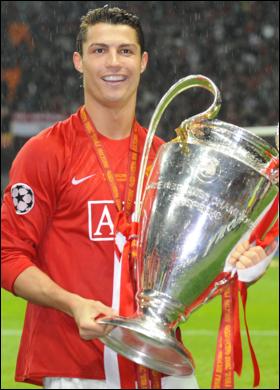
Cristiano Ronaldo, was born on 5 February 1985 in San Antonia, Madeira. He is a Portuguese soccer player who plays in the winger position and is known for his ability to score goals using both his right and left foot. Cristiano Ronaldo holds another distinction and that is of being the most expensive player in soccer history. He was transferred from Manchester United to Real Madrid for £80 million (US$132m/EUR94m).

Cristiano Ronaldo started playing soccer at the age of eight and started off with an amateur team called Andorinha. He signed up with a local club called Nacional in 1995 and went on to win the title. Following this, he joined a 3-day soccer trial with Sporting Clube de Portugal and was later signed on for an undisclosed sum. Cristiano Ronaldo went on to join other youth players of Sporting who he had trained with at the Alcochete at Sproting's football academy. Ronaldo achieved the distinction of being the only Sporting player to have played for the U-16, U-17, U-18, B-team, and first team of the club in the same season. He ended up scoring two goals on his debut with Sporting against Moreirense during the UEFA Under-17 Championships.

Cristiano Ronaldo was spotted at the age of 16 by Ex-Liverpool manager Gérard Houllier but at that time Liverpool declined because they felt he was too young. Later on in 2003, he caught the attention of Manchester United manager Sir Alex Ferguson while playing for Sporting. Sporting defeated Manchester United 3-1 in Lisbon.

Cristiano Ronaldo became the first ever Portuguese player in the Manchester United team. He was signed on after the 2002-03 season for £12.24 million and he scored his first goal as a United player against Portsmouth in November 2003. He was also responsible for scoring the 1000th premier league goal for Manchester United in October 2005 against Middlesbrough. In 2005, Ronaldo was voted as the FIFPro Special Young Player of the Year.

Cristiano Ronaldo earned his first Portugal team cap against Kazakhstan in August 2003 as they went on to win the match 1-0. He made it to the Euro 2004 in spite of their loss to Greece in the finals. Ronaldo was able to score only 2 goals in the Euro 2004 championship. The same year, he went on to represent Portugal in the 2004 Summer Olympics and was considered to be the second-highest scorer in the FIFA World Cup qualification stage of the European zone.

In the 2006-07 season, Ronaldo won consecutive "Barclays Player of the Month" award and thus became the third player in Premier League Championship history to have achieved it. In the UEFA Euro 2008 qualifying campaign, Cristiano Ronaldo scored eight goals for Portugal but finished the tournament with only one goal. In total, Ronaldo has appeared in 336 matches playing for Sporting CP, Manchester United, and Real Madrid and has scored 136 goals. He has also published an autobiography titled "Moments"

Kelly Hunter owns and operates [http://www.soccer-training-equipment.org] and writes about Soccer Training Equipment [http://www.soccer-training-equipment.org]

domingo, 1 de febrero de 2015

Football Players - Born in One Country and Playing For Another

Football Players - Born in One Country and Playing For Another

If in some cases these players have an emotional connection to the country for which they became naturalized, in other cases that no longer happens.

At a time when it is quite normal for football clubs to field foreign football players, clubs like Athletic Bilbao from Spain and Hrvatski Dragovoljac in Croatia, go against the grain in their insistence on fielding only local players.

However, when it comes to most national teams, the acceptance of foreign players is viewed differently, when they include players that can only be described as nationals in a very loose sense.

Yet this is not a recent trend and in fact the practice had been going on prior to World War II as is the case of the German team that absorbed the best Austrian players and even forced Ernst Wilimowski of Poland into its squad during the occupation of Poland.

Before the 1934 World Cup, Italy naturalized a number of fantastic South Americans of Italian descent, like Demaria, Orsi, Monti, and Guaita who helped the "azzurri" win the World Cup against Czechoslovakia.

Ferenc Puskas became a Spanish citizen after the bloody Soviet invasion of Hungary in 1956. Spain also gave passports to another Hungarian Ladislav Kubala, as well as the Argentinian national Alfredo Di Stefano who was of Italian descent. More recently, Donato Silva of Brazil represented the Spaniards.

Picking naturalized players for national teams knows no borders.

The World Cup 2010 in South Africa will have many players that were born in one country but chose to represent another. In many cases they came from former colonies, a situation quite common in the French team that won their only world title with the precious help of players born in former French territories.

Would "Les Bleus" have been so successful without great African players like Zinedine Zidane (Algeria), Patrick Vieira (Senegal) or Marcel Desailly (Ghana), Caribbean Islands reinforcements like Lilian Thuram and Thierry Henry (Guadalupe) or Christian Karembeu (New Caledonia in the Pacific Ocean) as well as Robert Pires (Portugal) David Trezeguet (Argentina), Youri Djorkaeff and Alain Boghossian, both from Armenia? It looked more like a World XI team that brought the World Cup and European Championships trophy home, to France. Michele Platini one of the best French players of all time was Italian.

Germany soon filled the absence of Klinsmann, Bierhoff and Kirsten when they retired. Players like Rink and Cacao (Brazil), Bobic (Slovenia), Dundee (South Africa), Neuville (Switzerland), Asamoah (Ghana), Mehmet Scholl (Turkey) Kurany (Brazil) as well as Littbarski, Klose and Podolski (from Poland). Poland's national team has also adopted Emanuel Olisadebe of Nigeria.

Holland started using many fantastic players like Clarence Seedorf, Edgar Davids, Ruud Gullit, Patrick Kluivert, Frank Rijkaard, Pierre van Hooijdonk and Aaron Winter just to name some of the best, all from Surinam, a former Dutch colony in South America. Philip Cocu was French but played for the Orange team.

Despite being a recurrent process, FIFA has been battling to reverse the growing trend of naturalized players. Some measures however, have been taken to change things in the right direction.

FIFA has increased from two to five years the time required in which the player must live in a country, before beginning the process of naturalization. There is also the requirement that the player had never represented his nation of origin, including at youth level.

Some of these players will participate in the 2010 World Cup in South Africa. You can read the Full article about the Naturalized football players here [http://2010-southafrica.com/news-of-interest/born-in-one-country-and-playing-for-another/].

Gil Santos is the author and the owner of a Soccer website that provides news and information about South Africa and the 2010 World Cup [http://www.2010-southafrica.com]